Awesome drive, awesome acceleration, great range. Only downside . . . I wish that the dealership was closer.
LOVE my EV!!
Submitted by: karen root watkins
LOVE my EV!!
Submitted by: karen root watkins
Awesome drive, awesome acceleration, great range. Only downside . . . I wish that the dealership was closer.
APC Green is a key part of our decarbonization process, along with solar & electrification. Here’s a more detailed description for those who have questions.…
APC Green + Rooftop Solar + ASHP + EV = Decarb
Submitted by: Fran Cummings
APC Green + Rooftop Solar + ASHP + EV = Decarb
Submitted by: Fran Cummings
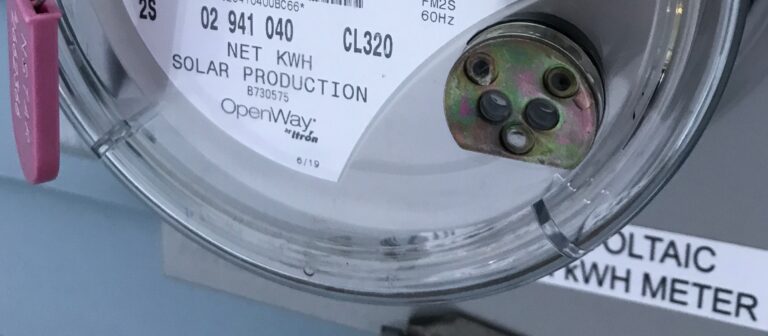
APC Green is a key part of our decarbonization process, along with solar & electrification. Here’s a more detailed description for those who have questions. We asked the builder of our free-standing condo unit to install an air-source heat pump in 2019 (as mentioned in another testimonial). He reluctantly installed a central or hybrid heat pump integrated with a gas furnace (reluctant because he was unfamiliar) -- not a “cold-climate” model but an American Standard “Gold 17” model with a relatively poor “heating season performance factor” (HSPF) of 8.50, but the gas backup is rarely needed. We also charge an EV at home, so we no longer buy gasoline. In 2022, these two electrification measures increased our electricity usage by 83% (from 9,800 kWh to 18,000 kWh/year). But we also installed rooftop solar PV which generates more electricity (11,000 kWh) than the electrification requires. For the electricity we still need from the grid, we opted up to ActonPowerChoice.com Green which consists of 100% renewables (“MA Class I” to make sure it has an impact). All this has been worth doing but of course to really make a difference we need more ambitious public policies to help decarbonize everything, and fast -- so keep talking with everyone about climate voting and advocacy, as well as individual actions!
We had a whole-house air-source heat pump installed during construction of our new Acton house in 2019 (pictured here), based on our 6 years of…
Heat pumps are amazing
Submitted by: Fran Cummings
Heat pumps are amazing
Submitted by: Fran Cummings
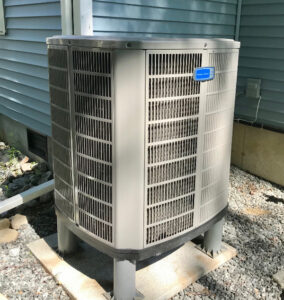
We had a whole-house air-source heat pump installed during construction of our new Acton house in 2019 (pictured here), based on our 6 years of successful experience with a central heat pump in our former house in Massachusetts. The key to their efficiency is that they don’t create heat by burning fuel; instead, they move heat from outside to inside the home (or the reverse in summer). I’m still amazed that this is possible in the winter, but it’s basically the same process as moving heat out of the inside of your refrigerator and freezer. Years ago, people worried about the need for some kind of backup in the very coldest hours of the year. But for us, over the 5-month heating season, backup was only needed for 65 hours, which is only 1.8% of the time. The newest "mini-split" heat pumps are even more effective at low temperatures. A heat pump is one of the biggest reductions in carbon emissions that a home can make. And it’s affordable, especially with electricity generated by the sun!
I am not only buying less stuff, but I am donating a lot of stuff to organizations for people who might need it. One reduction…
Who needs stuff anyway???
Submitted by: Carolyn Platt
Who needs stuff anyway???
Submitted by: Carolyn Platt
I am not only buying less stuff, but I am donating a lot of stuff to organizations for people who might need it. One reduction I am following is no longer buying souvenirs on trips. Last year I returned from a trip to Spain and discovered I had stuff around the house from previous trips to Spain. Also I went through my clothes, gave away a lot and since then have only bought what I really need. I've reached the point where I feel better letting go of stuff rather than buying more stuff!!!
Want an eye opener about stuff? Go to https://www.storyofstuff.org/movies/story-of-stuff/
If you are reading this you know eating more beef and dairy has an effect on increase in greenhouse gas. And I am sure you…
Change your diet to “reduce hazardous waist”
Submitted by: Virginia Dow
Change your diet to “reduce hazardous waist”
Submitted by: Virginia Dow
If you are reading this you know eating more beef and dairy has an effect on increase in greenhouse gas. And I am sure you know it increases your chance of heart disease. The diet changes we need for our health and the environment go beyond this to eating less processed foods and simple carbs and more quality carbs like whole grains, nuts, beans, vegetables and whole fruits.
I have been a cardiac nurse for over 40 years and the number one reason patients tell me they developed heart disease is "my diet". The program I run, helping patients change this, has me believing that people can make this diet change and always feel better when they do.
The title "reduce hazardous waist" comes from the research that shows even a thin person who develops belly fat begins to be unhealthy as this causes high BP, diabetes, heart disease and cancer. I see when I walk at the side of the road junk food wrappings and I see it as an "invasive species" of food, crowding out people from eating what their bodies need and will crave once they shift away.
We changed from an electric coil stove to an induction. In addition to its helping to save the planet, it's not only easy to use…
Hurray for induction stove tops!!
Submitted by: Carolyn Platt
Hurray for induction stove tops!!
Submitted by: Carolyn Platt
We changed from an electric coil stove to an induction. In addition to its helping to save the planet, it's not only easy to use but responds quickly to temperature change. Yesterday my pot of rice started to boil over, and I immediately turned down the temperature...and voila! No boil over. I love the ability to quickly get to a high temperature and then lower the temperature without burning (ie to get onions cooking fast but not browning) It's super easy to clean too.